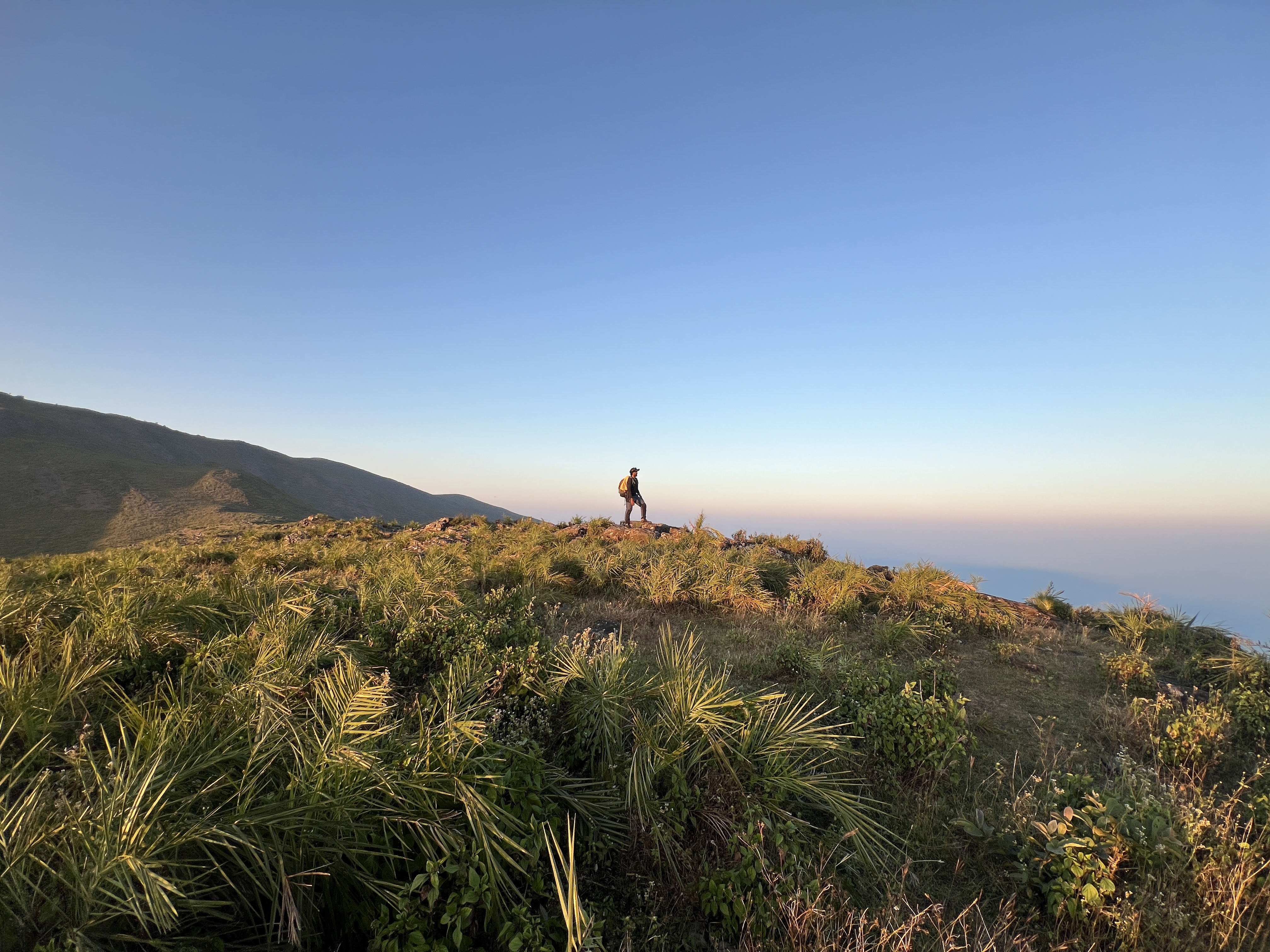
One of the least-visited mountain ranges of the Eastern Ghats — deep valleys, forest catchments, and the headwaters that feed the Paderu reservoir.
Kappakonda is where the streams that feed the Paderu reservoir are born. The trail moves through wide grasslands, deep forests and rolling ridges, with jaw-dropping views into the valleys on either side — and almost nobody else on the mountain. For those seeking solitude and raw beauty, this is the offbeat weekend the Eastern Ghats keep quietly to themselves.
The journey
Day 1Vizag to the hidden mountain
Grasslands, forest and rolling ridges
Valleys falling away on both sides
Cooked fresh at camp
Day 2Sunrise on the peak
7:30–8:00 pm
*Timings are approximate and may vary with weather and trail conditions.
What your contribution holds
Everything that's taken care of
Both ways, in shared vehicles — pickups across the city
Day 1 — breakfast, lunch & dinner · Day 2 — breakfast & lunch
Tents, mattresses & sleeping bags — all provided
EcoHikes trek lead with local community guides
Kits carried by the leads throughout
Permissions and coordination
- Personal expenses
- Personal gear & equipment
- Snacks & beverages
- Anything not mentioned above
Trip essentials
Tap a card for the full details.
Questions, answered
How is this different from Jindhagada?
Jindhagada is the highest and best known; Kappakonda is the quiet one — fewer trekkers, wilder camping, and the feeling of having a mountain to yourselves.
How hard is it?
Moderate — 10–14 km over two days with steady grassland and ridge climbs. Fine for anyone 8 and up with basic fitness.
Where do we sleep?
Wilderness camping on the mountain — tents, mattresses and sleeping bags provided.
Why 'headwaters'?
The streams born on Kappakonda feed the Paderu reservoir system — you walk the catchment where that water begins.
How cold do the nights get?
Winter nights on the Eastern Ghats are properly cold, often in single digits on clear nights, and the wind on open ridges makes it feel colder. Bring a fleece or winter jacket, a warm cap and gloves, and sleep in dry layers.
Will I see the ocean of clouds?
On many winter mornings, yes. Cold air settles in the valleys and a thick cloud bed forms below the ridge at sunrise. It depends on the day, so we cannot promise it, but winter gives you the best chance of the year.
Can I see the stars?
Yes, when the sky is clear. Camp is far from city lights, so winter nights give a sky full of stars, and some departures coincide with meteor showers. Fog or cloud on the night can cover them.
Do I need to carry a tent or sleeping bag?
No. Tents, 6 mm mats and sleeping bags are provided. You only carry your own clothes, water and personal items.
What people say
“Incredibly friendly guides — knowledgeable, always ready to help, and they made the journey fun and safe. They took time to explain things and made the trek enjoyable for everyone.”
“What makes Eco Hikes special is the authenticity — no rush, no commercial vibe, just genuine people helping you connect deeply with nature.”
“Ravi, Naveen and Manohar take care of the people and make every trek safe and memorable. My 3rd time trekking with Ecohikes and many more to come.”
Similar experiences
How joining works
Fill the short form or write to us — we reply within a day.
A quick call or WhatsApp — fitness, season, group, dates.
A 50% advance holds your place; the rest on trek day.
Your confirmation arrives by mail — and you join the batch WhatsApp circle.